
Introduction
Property managers in Ontario have a lot on their plate – overseeing multi-unit residential buildings, commercial plazas, condo complexes, or mixed-use properties – and security is at the top of the priority list. With crime trends shifting in recent years, keeping properties safe in regions like Peel, Hamilton, Niagara, Halton, the Greater Toronto Area (GTA), and the Tri-Cities (Kitchener–Waterloo–Cambridge) has become more challenging.
In fact, nearly half of Canadian small businesses (45%) experienced some form of crime in 2024 – almost double the rate from the year prior. In Ontario alone, the share of small firms hit by theft, vandalism or other safety incidents jumped from 24% in 2023 to 40% in 2024. It’s no wonder one business group called it a “nightmare on Main Street,” with stores facing stolen goods, smashed windows, and repeated vandalism.
For property managers, these statistics hit close to home because every break-in, act of vandalism, or unauthorized entry on your property can mean upset tenants, costly repairs, and even legal liabilities. Ensuring robust security isn’t just about crime statistics – it’s about protecting the people who live and work in your buildings and safeguarding the investment that each property represents.
A single incident (like an intruder accessing a condo building or a theft from a commercial tenant’s office) can erode tenant confidence and damage your reputation.
In this blog, we’ll walk through the common security concerns Ontario property managers are facing today and explore practical solutions – from modern access control systems to smart video surveillance – to address those challenges. We’ll also look at local crime trends in areas like Peel, Hamilton, Niagara Halton, the GTA, and the Tri-Cities to understand the risks, and discuss how our team at SecurU supports property managers with tailored security services.Let’s dive into what you need to know to keep your properties safe and secure in 2025 and beyond.
Common Security Concerns for Property Managers
Managing a property means expecting the unexpected when it comes to safety and security. Here are some of the most common security concerns property managers in Ontario have to contend with:
Unauthorized Access
Unwanted visitors sneaking into buildings is a constant worry. Properties often have multiple entry points – from front lobbies and parking garages to side doors and service entrances – and each one is a potential gateway for intruders if not properly secured.
You might think a trespasser wandering the halls is merely a nuisance, but the danger is real: once inside, intruders could commit theft, vandalism, arson or even cyber attacks if they access secure areas. For example, an individual tailgating into a condo behind a resident might roam the building, break into storage lockers, or steal packages.
The unexpected nature of unauthorized intrusions means tenants can be caught off-guard, and as the property manager, your reputation is on the line if anyone’s safety is compromised.
Vandalism and Property Damage
Graffiti, broken windows, and damaged facilities are not only costly to repair but also create a sense of insecurity for tenants. Unfortunately, vandalism is on the rise in many communities. In Peel Region, for instance, reported vandalism incidents jumped from 3,418 to 4,811 within just a couple of years.
Each act of vandalism – whether smashed lights in a parking lot or a ransacked lobby – sends a message that the property isn’t fully protected. As a property manager, you’re often left arranging cleanup, repairs, and appeasing residents or commercial tenants anxious about the damage.
Theft (Burglary and Break-Ins)
Whether it’s a storage locker break-in at an apartment, a burglary at a retail unit in a mixed-use complex, or theft of packages and bicycles, property-related theft is a major concern. Thieves often target what they see as easy opportunities – an unlocked door, a dark corner without cameras, or lax procedures for entry.
Across Ontario we’ve seen concerning trends: Halton Region has experienced year-over-year increases in break-and-enter cases (up 28% in early 2024), and in Peel, break-and-enters reached roughly 2,850 cases in 2024, rising from 2,241 in 2022. Even the Waterloo Region (Tri-Cities) saw hundreds of residential break-ins – 568 reports in just the first eight months of 2024.
These numbers highlight that no property type is immune.
Liability and Negligent Security
An often overlooked concern is the legal liability that can fall on property owners and managers if adequate security measures aren’t in place. Under premises liability laws, property managers have a legal obligation to take reasonable steps to protect tenants, staff, and visitors from foreseeable harm.
If a court finds that a break-in, assault or other incident happened due to negligent security (for example, broken locks that weren’t fixed or cameras that weren’t functional), the property management could be held liable for damages. That means lawsuits, large legal bills, and even potential financial penalties.
Tenant Safety and Peace of Mind
At the end of the day, the safety of residents and tenants is the fundamental concern. People want to live and work in places where they feel secure. If tenants start to feel unsafe – maybe there have been reports of strangers lurking in hallways, or a rash of car break-ins in the parking garage – you risk losing good tenants and facing higher vacancy.
Moreover, tenants may pressure management or condo boards for security upgrades if they feel exposed to risk.
Access Control: Your First Line of Defence
One of the most powerful tools in a property manager’s security toolkit is access control. Managing who can enter your building and when is essential for preventing unauthorized access, theft, and liability. In 2025, outdated lock-and-key systems or front desk sign-in sheets simply don’t cut it. Modern access control solutions are smarter, more secure, and scalable for buildings of any size — from a single mid-rise in Mississauga to a portfolio across the GTA.
Key Cards and Fobs
Many condos and commercial buildings already use RFID cards or fobs — and with good reason. They’re easy to issue, revoke, and tailor to specific areas (e.g., a fob that grants access to the parking garage but not mechanical rooms). If a card is lost or a tenant moves out, access can be deactivated with a few clicks — no locksmith required.
But they aren’t foolproof. Fobs can be cloned or shared depending on the technology, if you are looking for encrypted protection to prevent cloning, Kantech ioSmart Smartcard readers and card credentials are a great solution and provide 128 bit encryption from card, reader to the cloud. That’s why many Ontario property managers are moving toward more advanced systems.
With ongoing innovations like long range transmitters and a SALTO partnership, Kantech and other security providers are allowing property managers to consistently improve their property’s security.
Mobile Credentials
The next evolution in access control? Your phone. Smartphone-based systems, like Kantech’s EntraPass Go Pass, turn mobile devices into secure access credentials. Tenants simply tap their phone or use Bluetooth to unlock doors — no fob needed. Mobile credentials are harder to clone and easier to manage remotely. Lose your phone? Access is revoked instantly.
Cloud-Based Systems
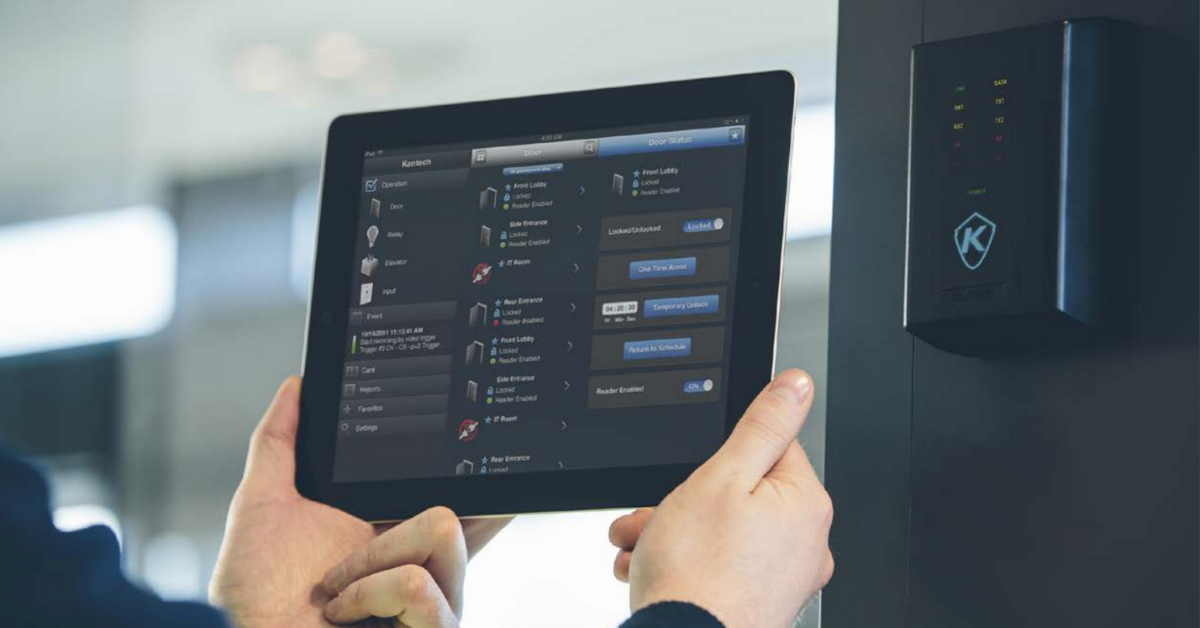
With traditional systems, managing access required on-site servers and desktop software. Today, cloud-managed platforms — such as Kantech hattrix, supported by SecurU — let you control your property’s access points from anywhere.
Whether you’re at home or on the go, you can lock or unlock doors, issue or revoke credentials, update the telephone entry systems, tenants list, and monitor entry logs in real-time. Cloud systems also provide backup protection, eliminate costly on-site hardware, and support multi-site management — ideal for property managers overseeing multiple buildings.
Smart Alerts and Schedules
Modern access systems go beyond door control. They integrate with building operations to offer automation and real-time alerts. For instance:
- Schedule doors to lock automatically after office hours
- Get notified if a door is left propped open
- Grant emergency contractors access remotely at 3 a.m.
- Instantly remove access for departing staff or vendors
This level of control gives you full visibility and fast reaction time without needing to be on-site.
Choosing a Trusted Provider
We recommend Kantech because of its track record for reliability and flexibility. Their systems — from EntraPass software to hattrix cloud hosting — support everything from standalone buildings to enterprise-level deployments. And because SecurU is an experienced Kantech integrator, we ensure smooth setup and ongoing support.
Ultimately, access control is more than a tech upgrade, it’s a culture of safety. When tenants know access is secure and actively managed, it builds trust, discourages “door holding” for strangers, and reinforces your property’s professionalism.
Video Surveillance and Monitoring: Keeping an Eye on Things 24/7
If access control is your property’s doorman, video surveillance is your tireless night watch. Whether you’re managing a high-rise in Toronto or a commercial complex in Burlington, a modern surveillance system helps you detect and deter incidents in real time—not just review them after the fact. With the right setup, you can monitor your property from anywhere and always have evidence when you need it.
High-Definition Cameras with Smart Analytics
Today’s surveillance cameras, like the Illustra line of IP models, offer crystal-clear HD or even 4K resolution with excellent performance day or night. But it’s not just about clarity. These cameras use AI-powered analytics to differentiate between real threats and false alarms, identifying the difference between a person and, say, a tree blowing in the wind.
Smart features can flag unusual activity, like someone loitering in a parking garage late at night or multiple people entering a restricted area. Some models even include built-in deterrents such as flashing lights or two-way audio, automatically issuing warnings that are often enough to stop unwanted behaviour.
Remote Monitoring and Mobile Access
One of the biggest advantages of modern surveillance is the ability to monitor everything remotely. With platforms like Alarm.com, property managers can view live feeds, receive alerts, and access video clips from a phone, tablet, or computer—anytime, anywhere.
For example, if a fire alarm is triggered in the middle of the night, you can immediately check the lobby camera without leaving your home. You can also set alerts for after-hours activity, like someone approaching a loading dock. It’s a simple way to stay informed, respond faster, and gather clear evidence for insurance or law enforcement if necessary.
Seamless Integration with Access Control and Alarms
Surveillance works best when it’s connected to the rest of your security system. When integrated with access control and alarms, your cameras become part of a larger safety network. If a door is forced open, the system can instantly tag that moment in the video archive, begin recording at a higher resolution, and send an alert.
Platforms like Alarm.com allow you to view alerts, verify them with live video, speak to visitors through the camera, or unlock a door remotely. Some property managers even pair surveillance with elevator controls to restrict floor access unless a valid credential is used.
Professional Monitoring Support
Even the best system can’t do it all alone. That’s where professional monitoring services come in. SecurU works with trusted partners who can monitor your cameras after hours, verify alerts, and take action when necessary. That could mean using two-way audio to warn a trespasser, triggering an alarm, or dispatching a security team.
Many systems also offer video verification, allowing a live operator to confirm a threat before calling the police. This not only reduces false alarms but can help you receive faster emergency response when it counts.
Coverage and Camera Quality Matter
Effective surveillance depends on smart placement and reliable equipment. Entrances and exits, parking lots, elevators, hallways, and reception areas are all high-priority zones. Illustra cameras are a trusted choice because they offer flexible solutions for everything from wide outdoor spaces to discreet indoor monitoring.
Even one well-positioned camera in a lobby can make a difference, capturing clear footage of every person who enters. Just as importantly, the visibility of these systems can serve as a strong deterrent to would-be intruders or vandals.
A well-designed surveillance system does more than record—it helps you prevent issues, protect your tenants, and respond quickly when needed. It’s a vital part of any modern property manager’s security strategy.
Crime Trends in Ontario
Peel Region (Mississauga/Brampton)
Peel Regional Police have noted that while overall crime severity remains lower than the national average, non-violent crimes (which include property crimes like theft and break-ins) jumped significantly recently – Peel’s non-violent Crime Severity Index rose about 15.9% from 2022.
Auto theft has been a particular plague: between 2021 and 2023, vehicle thefts in Peel doubled (from roughly 4,000 to over 8,000 per year) according to one analysis. Organized auto theft rings are active in the GTA, and Peel has been hard hit — in one 12-month period, over 7,700 vehicles were stolen, with a solve rate of only 2.6%.
For property managers with parking facilities, this trend underscores the need for camera coverage and access control in garages. Additionally, Peel saw a rise in break-and-enters – estimated around 2,850 break-in cases in 2024, up from 2,241 in 2022 – and an increase in vandalism incidents (over 4,800 incidents in 2024).
Even though Peel is statistically one of Canada’s safest large regions, the local police chief has expressed concern about rising crimes like home invasions and carjackings. For a property manager, this means remaining vigilant and ensuring things like high-security door locks, proper lighting, and resident awareness in these communities.
Halton Region (Oakville/Burlington/Milton)
Halton has seen a notable surge in property crime in recent years. In the first half of 2024, property crime in Halton was up 18% compared to the same period the previous year. This continues an ongoing trend – in fact, over the past five years, Halton’s property crime incidents more than doubled (a 104.3% increase from 2020 to 2024).
As of mid-2024, a whopping 77.6% of all criminal incidents in Halton were property-related (theft, break-ins, mischief, etc.) – showing that crime in this area is predominantly targeting property. Specific jumps included a 28% rise in break-and-enters and a shocking 97% rise in reported fraud cases (often things like identity theft or scam-related crimes).
For property managers, Oakville and Burlington might not feel high-crime, but these numbers tell us that thieves are very active. There have been cases of organized groups targeting high-end homes and vehicles in these affluent communities. Translation: even in suburban settings, robust security (cameras, alarms, vigilant access control for condo buildings) is essential.
Halton Police have been urging businesses and residences alike to take precautions as clearance rates for property crimes remain low — property crimes are harder to solve on average.
Greater Toronto Area (Toronto & Neighbouring Cities)
The City of Toronto itself, according to police data, often has a lower per-capita crime rate than smaller communities. Toronto’s overall crime rate is relatively low compared to many Canadian cities.
However, the GTA as a whole has seen certain crime spikes. For example, retail theft and smash-and-grab style burglaries have been on the news, and organized retail crime is increasingly brazen – Peel and York police have busted large rings stealing goods in bulk. Commercial property managers in the GTA should be aware of these trends: a mix of professional thieves targeting store inventories (sometimes using vehicles to ram through storefronts) and opportunistic vandalism as mentioned earlier.
Toronto Police have also warned condo managers about package thefts and condo break-ins – common especially during holiday seasons when deliveries peak.
While Toronto’s violent crime tends to get headlines, property crimes like break-ins still occur frequently, and security measures like concierge checkpoints, cameras in lobbies, and fob access for elevators have become standard in most new developments.
In short, the GTA isn’t immune to the property crime wave – it just means property managers should not become complacent due to the city’s “safer than average” stats, and instead remain proactive.
Tri-Cities (Kitchener–Waterloo–Cambridge)
This area has a unique mix of urban and suburban, with tech industries and student populations. Waterloo Region Police reported some promising news: residential break-ins from January to August 2024 (568 cases) were actually lower than the average of prior years (2019–2023 average was 868 in that period). So break-and-enters to homes may be trending down a bit there – possibly thanks to community awareness and target-hardening.
However, other crimes are on the upswing. Robberies in 2024 increased by 5%, with a total of 286 cases, and notably, jewellery store robberies spiked by over 80% in that year. There was also a series of carjackings and youth-involved theft rings, indicating organized crime filtering into the region.
For property managers in Kitchener/Waterloo, this means you should keep an eye on both business security (for retail tenants vulnerable to smash-and-grab thefts) and residential security (like ensuring those student housing or condo units have proper locks and surveillance). Also, consider that even if break-ins dipped slightly, hundreds of break-ins a year is still cause for caution – thieves may be shifting tactics or targeting other types of property (like construction sites or commercial units).
Staying updated with local police alerts (many police services now share security bulletins or crime maps) can help you adapt your security measures to current threats.
Hamilton
Hamilton has recently experienced a notable increase in property-related offences. In February 2025 alone, Hamilton Police reported 57 property crimes in Ward 6, well above the five-year monthly average of 78 incidents. More broadly, the city saw a Crime Severity Index (CSI) of 59.5 in 2023, reflecting a 5% increase from the previous year. Though Hamilton’s overall crime rate remains 77% below the national average, incidents like auto theft and break-ins are surging, particularly in certain urban zones.
For property managers, this shift means increased focus on reinforcing access points, improving parking lot security, and deploying better surveillance coverage across high-traffic or vulnerable areas. As the city continues to grow, so too does the need for proactive property protection.
Niagara Region
While Niagara boasts a lower overall CSI than many urban centres, recent developments highlight localized safety concerns. In 2023, the St. Catharines–Niagara CMA posted a CSI of 54.5, continuing a steady decline from 64.3 in 2014. However, violent crime severity rose slightly to 66.9, and hate-motivated crimes tripled from 2.1 to 6.7 per 100,000 residents between 2020 and 2022.
This uptick in certain offence types—particularly in specific neighbourhoods—makes it critical for property managers to adopt perimeter surveillance, 24/7 monitoring, and community-sensitive incident response plans. Even in relatively low-crime regions, isolated threats can have outsized impacts on tenant safety and confidence.
Across all these regions, a common thread is that property crimes – thefts, break-ins, vandalism – remain a significant issue. They often outnumber violent crimes and can impact anyone. The trends tell us that investing in good security isn’t just paranoia; it’s a response to real risks. By understanding what’s happening in your area (be it car thefts in Peel or break-ins in Halton), you can better tailor your security approach – maybe it’s adding license plate cameras in your parking lot or extra lighting and patrols in response to local vandalism incidents.
Ultimately, numbers only tell part of the story. Let’s shift from “what’s happening” to “what can be done about it” – specifically, how SecurU partners with property managers to implement these solutions and stay ahead of the threats.
How SecurU Supports Property Managers in Ontario
Comprehensive Security Assessments
We often start by walking through your property to identify vulnerabilities – both obvious and not-so-obvious.
Integrated Systems Design
We ensure every component works seamlessly together – from access control to video surveillance to smart alarms.
User-Friendly Technology
We favour solutions that are intuitive. Many clients love that they can log in and manage systems with ease.
24/7 Monitoring and Support
Many of our systems include options for 24/7 monitoring. We offer maintenance plans and handle software updates and support.
Local Expertise and Vendor Partnerships
We’re familiar with local building codes and climate, and we partner with top-tier providers for the most reliable solutions.
Conclusion and Call to Action
Security is an ever-evolving challenge, but it’s one that Ontario property managers can meet head-on with the right approach and tools. By understanding common threats – from unauthorized access to vandalism and theft – and by leveraging modern solutions like cloud-based access control and intelligent surveillance, you can significantly reduce risks on your properties.
SecurU is here to help you evaluate your current security posture, identify gaps, and implement effective solutions tailored to your needs.
We encourage you to take the next step in fortifying your building’s security. Contact SecurU for a free consultation or to schedule a security audit of your property. Our security experts will provide an honest assessment and pragmatic recommendations.
Let’s start the conversation – reach out to SecurU today, and let’s work together to protect what matters most on your property.
 Kantech Next-Gen Long-Range Access Control Transmitters in 2025