
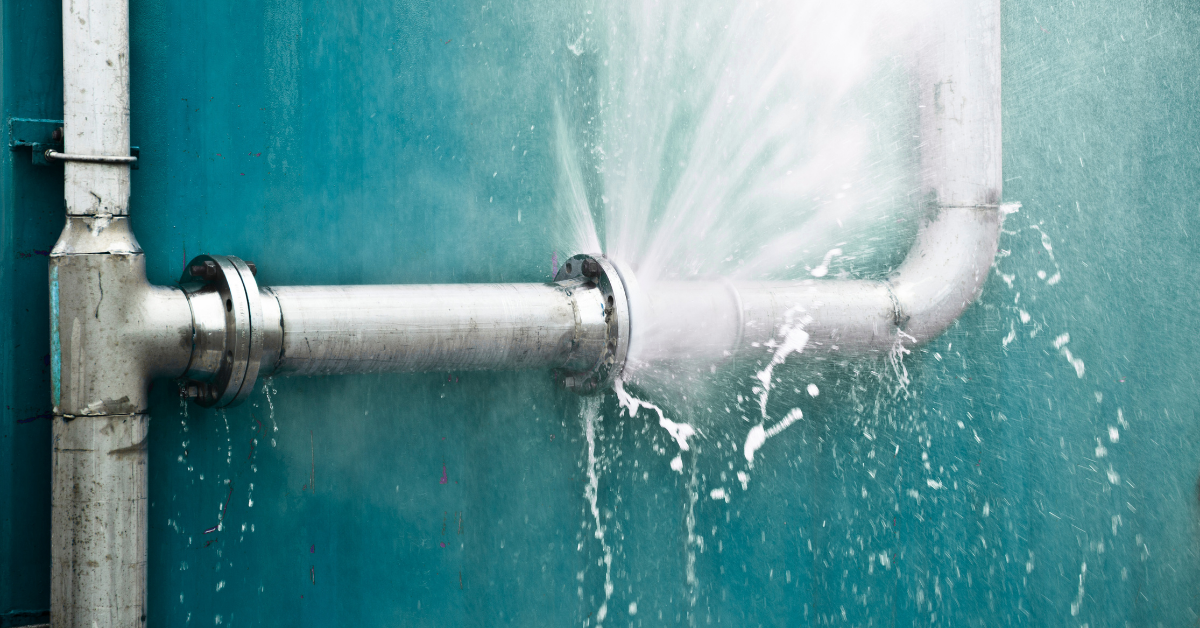
Preventing Costly Damage
Water leak damage remains one of the most disruptive and expensive operational risks facing commercial facilities across Ontario.
For warehouses, manufacturing facilities, office buildings, retail plazas, and multi-tenant commercial properties, even a minor leak can escalate quickly into:
- Equipment downtime
- Inventory loss
- Electrical damage
- Tenant disruption
- Costly remediation work
- Insurance claims and operational delays
While winter freeze events typically receive the most attention, late spring and early summer continue to create elevated risk across commercial environments. Heavy rainfall, groundwater pressure, fluctuating temperatures, and increased HVAC demand all place added strain on aging infrastructure and mechanical systems.
The challenge for facility operators is not simply identifying leaks. It is identifying them early enough to prevent escalation.
Modern commercial leak detection systems are shifting facilities away from reactive response and toward proactive protection through real-time monitoring, automated water shutoff, and integrated environmental awareness.
For Ontario organizations managing critical infrastructure, operational continuity now depends on having visibility into water-related risks before they become major incidents.
Why Water Damage Is One of the Most Expensive Commercial Facility Risks
The hidden costs go far beyond repairs
Most commercial water incidents begin small. A failed fitting, a slow mechanical leak, or a sump issue may appear manageable at first.
The real financial impact comes from what happens next.
Commercial water damage frequently leads to:
- Production interruptions
- Equipment and electrical system damage
- Inventory contamination or loss
- Mould remediation and air quality concerns
- Tenant displacement
- Emergency restoration costs
- Insurance deductibles and premium increases
In commercial environments, downtime is often more expensive than the repair itself.
For property owners and facility operators, delayed detection can quickly turn a maintenance issue into a business continuity problem.
Why commercial facilities are uniquely vulnerable
Commercial buildings present a very different risk profile compared to residential properties.
Facilities often contain:
- Large mechanical and utility areas with limited visibility
- Extensive plumbing and HVAC infrastructure
- After-hours periods with minimal staffing
- Critical operational systems that cannot tolerate downtime
- Multiple tenants or departments sharing infrastructure
The larger and more complex the facility becomes, the more difficult it is to identify developing water-related issues before damage spreads.
This is particularly true across:
- Warehouses and logistics facilities
- Manufacturing plants
- Commercial office buildings
- Property management portfolios
- Mixed-use developments
Without continuous monitoring, many incidents remain undetected until operational disruption has already occurred.
Where Water Incidents Commonly Start in Commercial Facilities
HVAC systems and rooftop units
As facilities transition into warmer weather operations, HVAC systems experience increased demand and fluctuating loads.
This creates elevated risk around:
- Condensation overflow
- Drain blockages
- Drip pan failures
- Valve and fitting stress
- Expansion and contraction in piping systems
These issues frequently develop gradually and may go unnoticed until water has already spread into ceilings, walls, or electrical systems.
Mechanical rooms and boiler systems
Mechanical rooms contain some of the highest-risk infrastructure within a facility.
Leaks involving:
- Pumps
- Boilers
- Water heaters
- Hydronic systems
- Mechanical fittings
can escalate quickly due to constant system pressure and the volume of water involved.
Without active monitoring, incidents in these low-visibility areas often remain undiscovered for extended periods.
Sump pumps and below-grade infrastructure
Heavy rainfall and groundwater saturation continue to place pressure on below-grade systems throughout Ontario.
Facilities may experience:
- Basement seepage
- Foundation leaks
- Sump pump overload or failure
- Drainage backflow
Older infrastructure is particularly vulnerable during prolonged wet periods.
Kitchens, plumbing hubs, and tenant spaces
Commercial kitchens, shared washrooms, plumbing hubs, and tenant utility areas remain common failure points due to:
- High water usage
- Aging connections
- Appliance wear
- Hidden leaks behind walls or cabinetry
In multi-tenant properties, a localized issue can quickly affect surrounding units and shared infrastructure.
Why Traditional Leak Detection Is No Longer Enough
Traditional leak sensors provide basic alerts after water is already present.
For many commercial environments, this creates several limitations:
- Delayed response during after-hours periods
- No automated intervention
- Limited visibility across larger facilities
- No integration with broader building systems
- Increased risk of escalation before teams can respond
Modern facilities increasingly require systems capable of:
- Continuous environmental awareness
- Real-time alerts
- Automated shutoff actions
- Centralized monitoring
- Scalable deployment across multiple sites
The goal is no longer simply detecting water leaks. It is limiting operational impact before damage spreads.
Smart Leak Detection with PowerG + Water Tile
The PowerG + Water Tile is designed to provide early leak and freeze detection across commercial environments where water-related incidents commonly originate.
Typical deployment areas include:
- Mechanical rooms
- HVAC infrastructure
- Basements and utility spaces
- Kitchens and plumbing hubs
- Storage areas with sensitive inventory
- Under sinks and near appliances
Using long-range PowerG + wireless communication technology, the system supports:
- Reliable connectivity across large facilities
- Flexible placement without extensive wiring
- Fast installation with minimal operational disruption
- Real-time alerts when water or freezing conditions are detected
For warehouses, manufacturing environments, and multi-floor commercial buildings, long-range wireless capability is especially important. Systems must maintain dependable communication across difficult infrastructure areas without requiring significant construction or retrofit work.
Automated Water Shutoff: Limiting Damage Before It Escalates
Early detection is critical, but automated intervention can significantly reduce overall damage severity.
The IQ Water Valve enables automatic water shutoff when integrated with leak detection systems. When a leak is identified, the valve can automatically stop water flow before the issue spreads further throughout the facility.
This helps reduce exposure from:
- Burst pipes
- Mechanical failures
- Appliance leaks
- Frozen pipe events
- Unattended after-hours incidents
The retrofit-friendly design integrates with common quarter-turn ball valves, allowing deployment without major plumbing reconstruction.
For commercial operators, automated shutoff provides several operational advantages:
- Reduced remediation costs
- Faster incident containment
- Lower business interruption risk
- Improved protection for equipment and inventory
- Reduced insurance exposure
In facilities with limited overnight staffing or remote operations, automated response capability becomes particularly valuable.
Why Unified Monitoring Matters for Commercial Facilities
At the center of the ecosystem is the IQ Panel 5, designed to unify detection, automation, and monitoring into a centralized platform. Help pairing your monitor? Click here.
Rather than relying on disconnected systems, facility teams can manage:
- Water leak detection alerts
- Freeze detection notifications
- Water shutoff events
- Environmental monitoring
- System status visibility
through one integrated interface.
The platform supports:
- Native PowerG + device integration
- Advanced automation workflows
- Remote monitoring functionality
- Scalable infrastructure for future expansion
For property management groups and multi-site operators, centralized visibility improves response coordination while reducing administrative complexity across portfolios.
Commercial Applications Across Ontario Facilities
Warehouses and distribution centers
Water-related incidents can impact large volumes of inventory and disrupt shipping operations.
Detection systems help:
- Protect inventory from leaks or flooding
- Monitor utility and sprinkler infrastructure
- Reduce downtime from water-related disruptions
Manufacturing facilities
Manufacturing operations rely heavily on uptime and equipment reliability.
Monitoring systems help:
- Protect production equipment
- Detect cooling and process-system leaks early
- Reduce costly production interruptions
Commercial office buildings
In office environments, water damage can affect:
- IT infrastructure
- Electrical systems
- Shared tenant areas
- Building operations
Early detection helps reduce after-hours escalation and improve operational continuity.
Property Management Portfolios
For multi-property operators, centralized monitoring enables:
- Remote visibility across locations
- Faster response to tenant issues
- Reduced emergency maintenance costs
- Better operational oversight
Residential and Multi-Residential Applications
While proactive water leak detection is becoming increasingly important across commercial facilities, these systems are equally valuable in residential and multi-residential environments where water damage can escalate quickly and remain undetected for extended periods.
For homeowners, common risks include:
- Burst pipes during colder temperature swings
- Appliance and washing machine leaks
- Basement seepage and sump pump failures
- Vacation properties left unattended
- Slow leaks behind walls, sinks, or mechanical areas
In many residential scenarios, the greatest risk is not the leak itself, but the delay in discovering it.
Modern leak detection and automated shutoff systems help homeowners:
- Receive real-time alerts when leaks occur
- Automatically stop water flow before major damage spreads
- Protect finished basements, valuables, and appliances
- Monitor properties remotely while away
- Reduce the likelihood of costly restoration work and insurance claims
These solutions are also increasingly relevant for:
- Condominium buildings
- Multi-residential properties
- Student housing
- Retirement residences
- Mixed-use developments
In these environments, a single undetected leak can affect multiple units, shared infrastructure, and neighbouring tenants.
By combining smart water leak detection, freeze monitoring, and automated water shutoff, property owners gain greater visibility and control over one of the most common and expensive forms of property damage.
The Insurance and Operational Side of Water Damage
Insurance providers increasingly scrutinize water-related claims due to rising restoration costs and recurring incidents.
Commercial facilities experiencing repeated losses may face:
- Higher deductibles
- Increased premiums
- Additional reporting requirements
- Greater claims complexity
From an operational standpoint, water incidents also create:
- Tenant dissatisfaction
- Delays in occupancy or operations
- Increased administrative burden
- Long-term maintenance complications
Proactive water leak detection and automated shutoff systems help demonstrate a stronger risk-management posture while reducing the likelihood of severe claims events.
Why Ontario Facilities Are Prioritizing Proactive Water Monitoring in 2026
Several factors are driving increased adoption of commercial water monitoring systems across Ontario:
- Aging building infrastructure
- More frequent severe rainfall events
- Rising restoration and insurance costs
- Increased demand for remote facility visibility
- Reduced staffing during after-hours periods
Facility operators are increasingly shifting toward proactive environmental monitoring strategies designed to reduce operational disruption and improve long-term resilience.
Conclusion
Water damage prevention is no longer just a maintenance issue. It is a critical part of operational risk management for commercial facilities.
For organizations across Ontario, proactive water leak detection, automated water shutoff, and centralized monitoring systems provide earlier visibility, faster response, and stronger protection against costly disruptions.
SecurU works with:
- Warehouse operators
- Manufacturing facilities
- Commercial property owners
- Property management groups
to design scalable commercial water leak detection solutions aligned with operational requirements and facility risk profiles.
Book a consultation with SecurU to assess vulnerabilities, improve visibility, and implement a smarter approach to commercial water protection in 2026.
 Security for Large Construction and Engineering Projects in Ontario: Keeping Sites Secure in 2026